


Go to NS0-528 Questions - Try NS0-528 dumps pdf
Dumps Practice Exam Questions Study Guide for the NS0-528 Exam
NEW QUESTION # 93
Which two cloud providers allow you to provision Cloud Volumes ONTAP as aSnapMirror destination?
- A. Azure
- B. DigitalOcean
- C. RackSpace
- D. AWS
Answer: A,D
NEW QUESTION # 94
One of the storage administrators accidently deleted a volume that is being used for a 1TB CIFS share. They acknowledged that the operation was done 8 hours ago. You need to recover this data as soon as possible.
Which step will restore the volume in under a minute?
- A. Restore the data from S3 bucket
- B. Restore the volume from ONTAP System Manager.
- C. Restore the data from NDMP backup.
- D. Restore files from a Windows client recycling bin.
Answer: B
Explanation:
If the volume was deleted within the retention window (by default, 12 hours), ONTAP allows you to quickly restore the deleted volume directly from System Manager, as it is still in the volume recovery queue. This process typically takes less than a minute and is the fastest recovery option in this scenario.
NEW QUESTION # 95
You decide to enable SnapMirror network compression on your NetApp clustered Data ONTAP environment.
Which two statementsare correct about enabling this feature? (Choose two.)
- A. You may only enable SnapMirror network compression on one HApair in a cluster, and traffic 1-1 is limited to routing through those nodes.
- B. The data transfer between the clusters must use the NDMP protocol.
- C. The compression engine creates multiple transfer threads corresponding to the number of CPUs on the source storage system.
- D. The data is compressed only while it traverses the network.
Answer: C,D
NEW QUESTION # 96
You have deployed IntelliSnap to list NetApp Snapshot copies in volumes on your ONTAP system, schedule new backups on unprotected volumes, and implement archiving to your remote AltaVault system.
Which additional NetApp product does IntelliSnap require to perform all of these actions?
- A. OnCommand System Manager
- B. OnCommand Insight
- C. OnCommand Performance Manager
- D. OnCommand Unified Manager
Answer: D
NEW QUESTION # 97
You want to ensure that a particular version of SnapManager for SQL is supported in a configuration.
Which three components need to be verified in the Interoperability Matrix? (Choose three.)
- A. Data ONTAP version
- B. FC HBA firmware
- C. On Command Unified Manager version
- D. SnapDrive version
- E. SnapManager version
Answer: A,D,E
NEW QUESTION # 98
You have a SnapVault backup from your primary site to your secondary site with a LUN in the volume.
In this scenario, what is transferred?
- A. UUID
- B. LUN mapping status
- C. selected Snapshot copies
- D. serial number
Answer: C
NEW QUESTION # 99
You deploy an ONTAP cluster for your primary site and another ONTAP cluster for your DR site. Now, you want to implement a replication solution between the two ONTAP clusters.
In this scenario, which solution would you choose?
- A. MetroCluster
- B. SnapCenter
- C. SnapMirror
- D. Syncmirror
Answer: C
NEW QUESTION # 100
A customer that is running 100% SAN workloads wants to begin tiering cold data from their AFF ONTAP-based systems using a FabricPool.
Using NetApp best practices, what should be configured to accomplish this task?
- A. NetApp StorageGRID
- B. NetApp Element
- C. Azure cool Blob storage
- D. Amazon S3 Glacier
Answer: A,C
NEW QUESTION # 101
A customer is running NetApp ONTAP 9.14.1 software and asks you to protect some data in a way that even disk zeroing cannot delete.
Which command enforces the requirement?
- A. aggregate create -snaplock-type compliance
- B. volume create -snaplock-type enterprise
- C. volume create -snaplock-type compliance
- D. aggregate create -snaplock-type enterprise
Answer: C
Explanation:
The SnapLock Compliance mode provides WORM (Write Once, Read Many) protection that is irrevocable, even by administrators, and not removable by disk zeroing or reinitialization. This satisfies stringent regulatory and tamper-proof data protection requirements.
NEW QUESTION # 102
You create a Snapshot copy of a NetApp volume in either OnCommand System Manager or through the ONTAP CLI.
In this scenario, what happens?
- A. A copy-on-write Snapshot copy is created and stored within the volume.
- B. A copy-on-write Snapshot copy is created and stored within the aggregate.
- C. A redirect-on-write Snapshot copy is created and stored within the aggregate.
- D. A redirect-on-write Snapshot copy is created and stored within the volume.
Answer: A
NEW QUESTION # 103
Your customer wants their existing iSCSI datastore running on NetApp ONTAP AFF cluster Cluster01 to continue operating even through a complete site failure. They already have another ONTAP AFF cluster Cluster02 in a different data center on their company site. You successfully implemented a SnapMirror active sync relationship between the two clusters. The LUN is replicated and the relationship is healthy.
Which two steps must you take next? (Choose two.)
- A. Rescan the disk on the application host.
- B. Map the LUNs on the secondary site.
- C. Map the LUNs on the primary site.
- D. Change the service policy on the SAN LIFs.
Answer: B,D
Explanation:
After setting up a SnapMirror active sync relationship, to ensure automatic failover in case of site failure, you must:
* Map the LUNs on the secondary site, so they are accessible during a failover.
* Change the service policy on the SAN LIFs to enable multipathing and ALUA support, ensuring paths are correctly managed between primary and secondary sites.
NEW QUESTION # 104
You are asked to perform a NetApp Snapshot copy single-file restore on a corrupted thin-provisioned LUN that is 10 GB in size and is currently at 80% full.
How much additionalfree space do you need in the volume to perform this operation?
- A. 20 GB
- B. 8 GB
- C. 16 GB
- D. 10 GB
Answer: D
NEW QUESTION # 105
A user has a NAS volume backed up with NetApp Snapshot copies. They have a large important database file that has been locked by a ransomware attack. The rest of the files on the volume seem completely fine so they only need to be able to restore this specific database. They are currently unable to restore this file, because of a lack of free space in the volume.
In this scenario, which action would allow the client to restore the file to a known good condition?
- A. Expand the FlexVol, then perform a single file SnapRestore.
- B. Create a FlexClone from a Snapshot copy, and manually copy the file back over the original.
- C. Enable Autogrow on the volume, and perform a full SnapRestore.
- D. Expand the Aggregate, then perform a single file SnapRestore.
Answer: A
NEW QUESTION # 106
A company is using SnapMirror SVM replication, with identity preserve set to false to protect an SMB-only dataset in case of a disaster.
What needs to be manually configured to allow SMB to have access to the data on the destination?
- A. SMB shares
- B. home directories
- C. SMB server
- D. name mappings
Answer: A
Explanation:
When SnapMirror SVM replication is configured with identity-preserve=false, network and protocol configurations (like SMB shares) are not replicated. Therefore, to allow SMB access on the destination SVM, you must manually create SMB shares on the destination after replication is initialized.
NEW QUESTION # 107
When installing a new AFF A700s, you notice that the HA interconnect adapters use miniSAS HD. You subsequently consult Hardware Universe to find out that only 0.5M cables are supported. Due to the importance of the system data fields that use this link, you delay the installation until you can acquire 0.5M cables.
In this scenario, which two system data fields are communicated between HA pairs over the interconnect adapters? (Choose two.)
- A. data LIF location
- B. heartbeat signal
- C. intercluster peering
- D. NVRAM mirroring
Answer: C,D
NEW QUESTION # 108
You are testing a MetroCluster disaster recovery scenario for your customer, and you get an error messaging stating that the test failed.
Which command should you use to view detailed error information?
- A. metrocluster operation show
- B. metrocluster show
- C. metrocluster interconnect mirror show
- D. metrocluster check config-replication show
Answer: A
Explanation:
The metrocluster operation show command provides detailed status and error information about MetroCluster operations, including switchover, switchback, and testing activities. It's the correct command to diagnose a failed disaster recovery test.
NEW QUESTION # 109
Which two types of volumes support NDMP backup? (Choose two.)
- A. FlexVol
- B. FlexGroup
- C. Flash Pool
- D. FlexCache
Answer: A,B
NEW QUESTION # 110
Exhibit: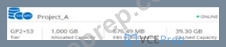
Referring to the exhibit, which two tiers are monitored in the volume capacity? (Choose two)
- A. licensed
- B. metadata
- C. capacity
- D. performance
Answer: C,D
NEW QUESTION # 111
What is the difference between a cold data tier and a hot data tier in a hybrid cloud data protection solution?
- A. A hot data tier is encrypted for protection, while a cold data tier is not
- B. A cold data tier is replicated more frequently than a hot data tier
- C. A hot data tier is optimized for data access, while a cold data tier is optimized for cost savings
- D. A cold data tier is faster than a hot data tier
Answer: C
NEW QUESTION # 112
You want to use SnapCenter to restore an MS SQL database on iSCSI LUNs from a previous application-consistent snapshot.
In this scenario, what is required to accomplish this task?
- A. Confirm multipathing for iSCSI is enabled on the host.
- B. Confirm that the iSCSI service is disabled on the host.
- C. Confirm that the database server is running on the host.
- D. Confirm that the database server is not running on the host.
Answer: C
NEW QUESTION # 113
......
Network Appliance NS0-528 Exam Syllabus Topics:
| Topic | Details |
|---|---|
| Topic 1 |
|
| Topic 2 |
|
| Topic 3 |
|
| Topic 4 |
|
| Topic 5 |
|
Free NCIE-Data-Protection NS0-528 Exam Question: https://testking.vceprep.com/NS0-528-latest-vce-prep.html